AI & Design
·
Published ·
Automate the mundane. Design the rest.
Automation does not remove the thinking. It removes the time between thoughts.

Something shifts when you stop asking which tool to use and start asking how the tools connect.
I do not have a technical background. I have never written production code. For most of my career the boundary between what I designed and how it got built was managed by someone else, a developer, an engineer, a technical partner who translated intention into execution.
That boundary is dissolving. And I am not waiting for someone else to cross it for me.
The big idea
Design workflows are about to change more in the next two years than they did in the previous ten. Not because a better design tool is coming. Because the definition of what a designer can build is expanding faster than most design leaders are tracking.
The opportunity is not in learning to code. It is in learning to connect. Pipelines, agents, automated synthesis, chatbots fed with real data and real personality. These are no longer engineering problems requiring engineering resources. They are workflow problems. And workflow is design territory.
The mindset shift is this: stop thinking about tools as things you open and start thinking about workflows as things you build. The canvas is not Figma. It is the system of connected intelligence that feeds Figma, informs research, and communicates decisions to stakeholders before a single screen is drawn.
The mundane is easier to name than people admit. Searching for the right component in a library that has grown too large to navigate. Tagging interview transcripts line by line before synthesis can begin. Generating layout variations to react to before committing to a direction. Writing the first draft of a brief that will be rewritten anyway. These are not design decisions. They are the scaffolding around design decisions. Automation does not remove the thinking. It removes the time between thoughts.
The setbacks
I want to be honest about what starting actually looked like.
The first encounter with n8n was frustrating. Not because the concept was unclear. Pipelines, nodes, connections, automation. That logic made sense. The friction was in the setup. Docker was the recommended local environment. For someone without a development background, Docker is a wall that does not explain itself. Error messages that assume you know what they mean. Dependencies that need dependencies. A setup process that feels designed for people who already know how it works.
I did not hand it off. Partly curiosity. Partly the conviction that if I stopped here I would always stop here, and that every future exploration would hit the same wall and use the same excuse.
What changed everything was using Claude and GPT not as assistants but as technical co-builders. Not "explain Docker to me" but "here is the exact error I am seeing, here is what I have tried, what is the next step." The specificity of the troubleshooting improved with the specificity of the prompt. That loop, attempt, error, prompt, fix, attempt again, is what got me through.
The API cost question came next. Building with external LLM APIs is not free, and at an exploration stage where the goal is learning rather than shipping, that cost adds friction. The practical solution was Ollama, running a local model. Which meant choosing the right model for the hardware available. Llama 3.1 over 3.2 for the weight it could carry without slowing everything to a halt. Small decisions that a developer would make instinctively, figured out incrementally by someone who was learning as they went.
None of this was clean. All of it was worth it.
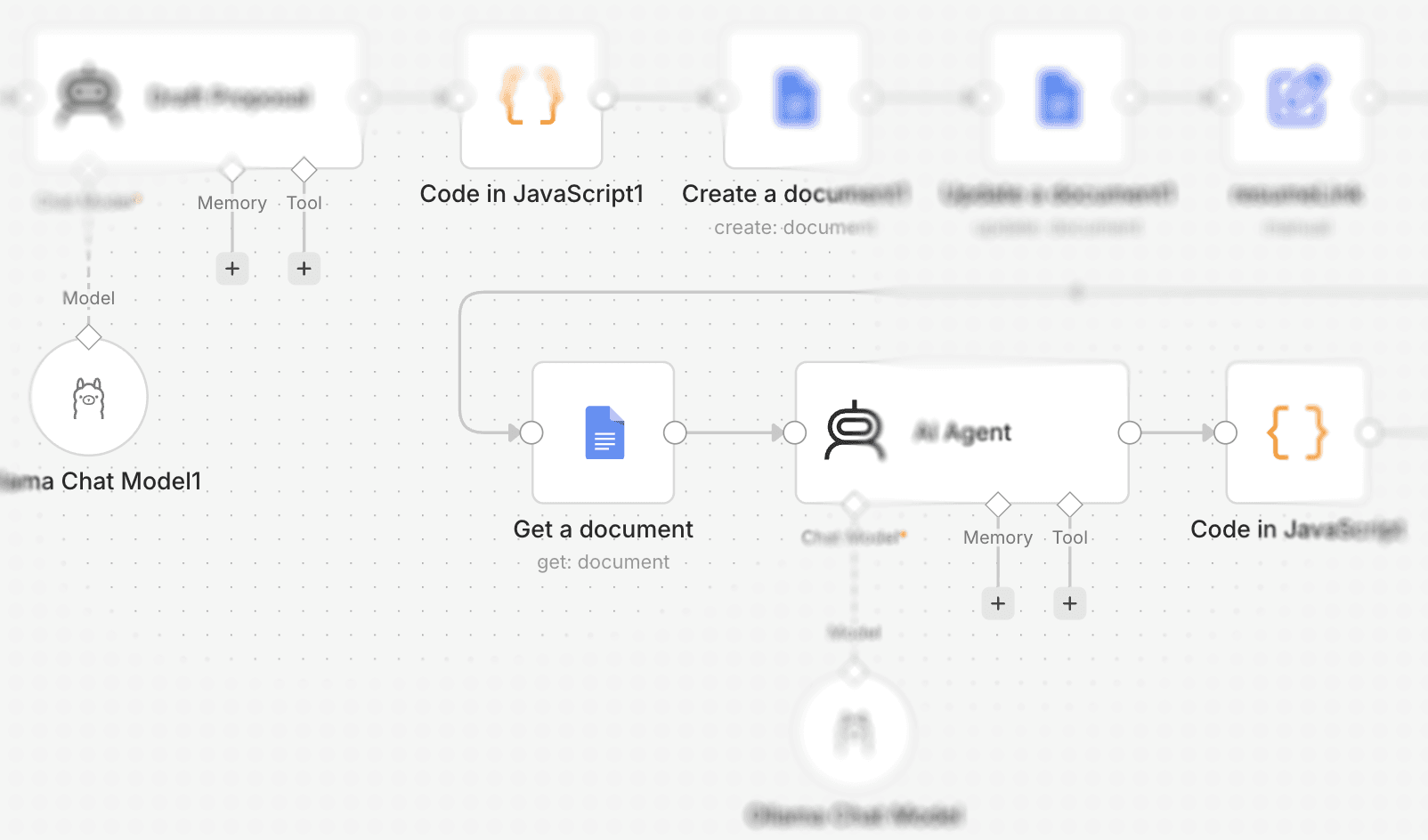
n8n pipeline in progress, early build of the Figma design system connector
What started to show promise
The first thing that felt genuinely different was the Figma component chatbot.
The idea is straightforward: a pipeline that connects to your design system and allows a designer to query it conversationally. Instead of navigating component libraries manually, searching for the right variant, checking token usage, you ask. Which component handles this state? What is the correct pattern for this interaction? The chatbot surfaces it from the system directly. For a team managing a design system at scale, this is not a convenience. It is a governance tool. It reduces the decisions made outside the system by making the system easier to access than the workaround. The mundane lookup becomes invisible. The design decision is all that remains.
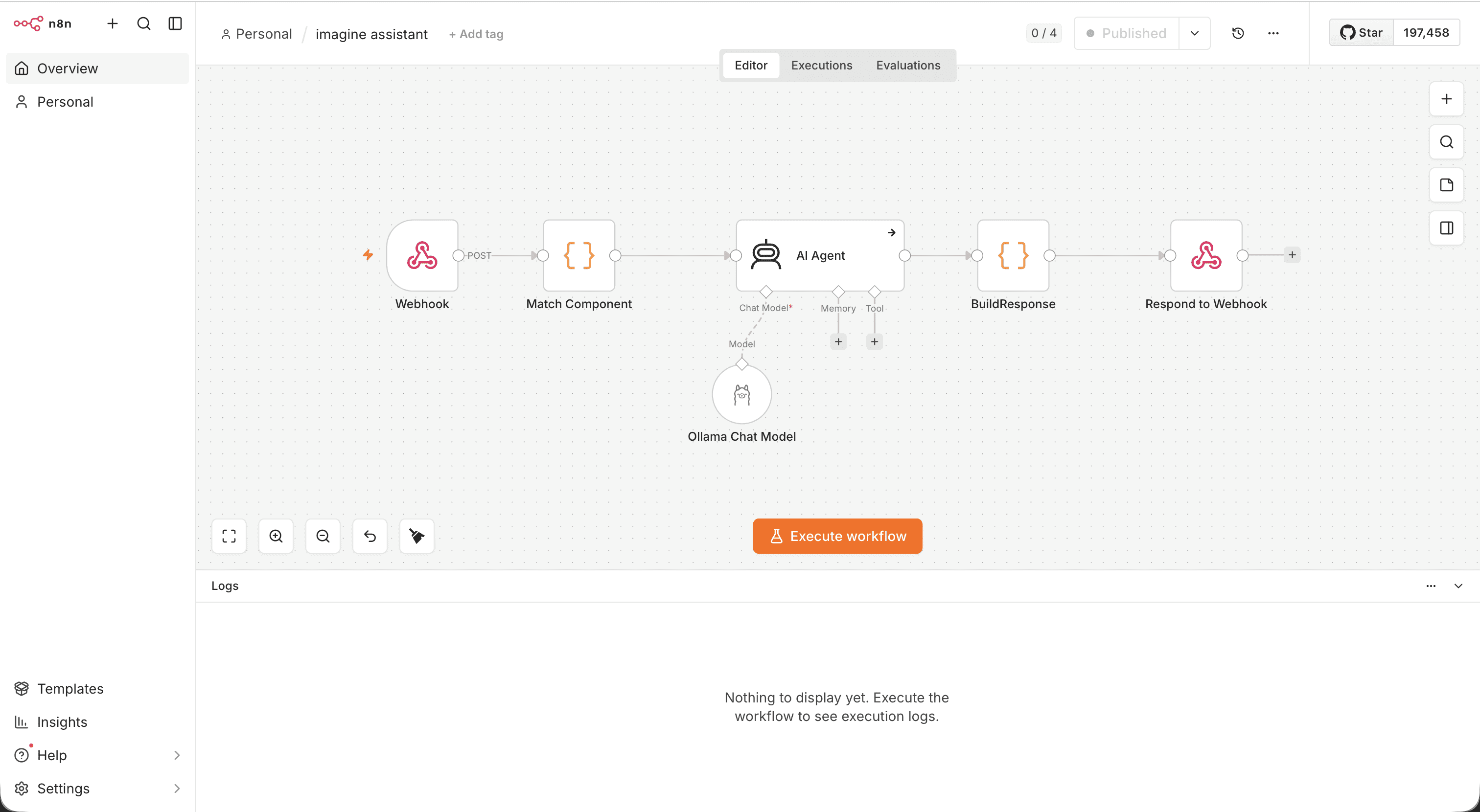
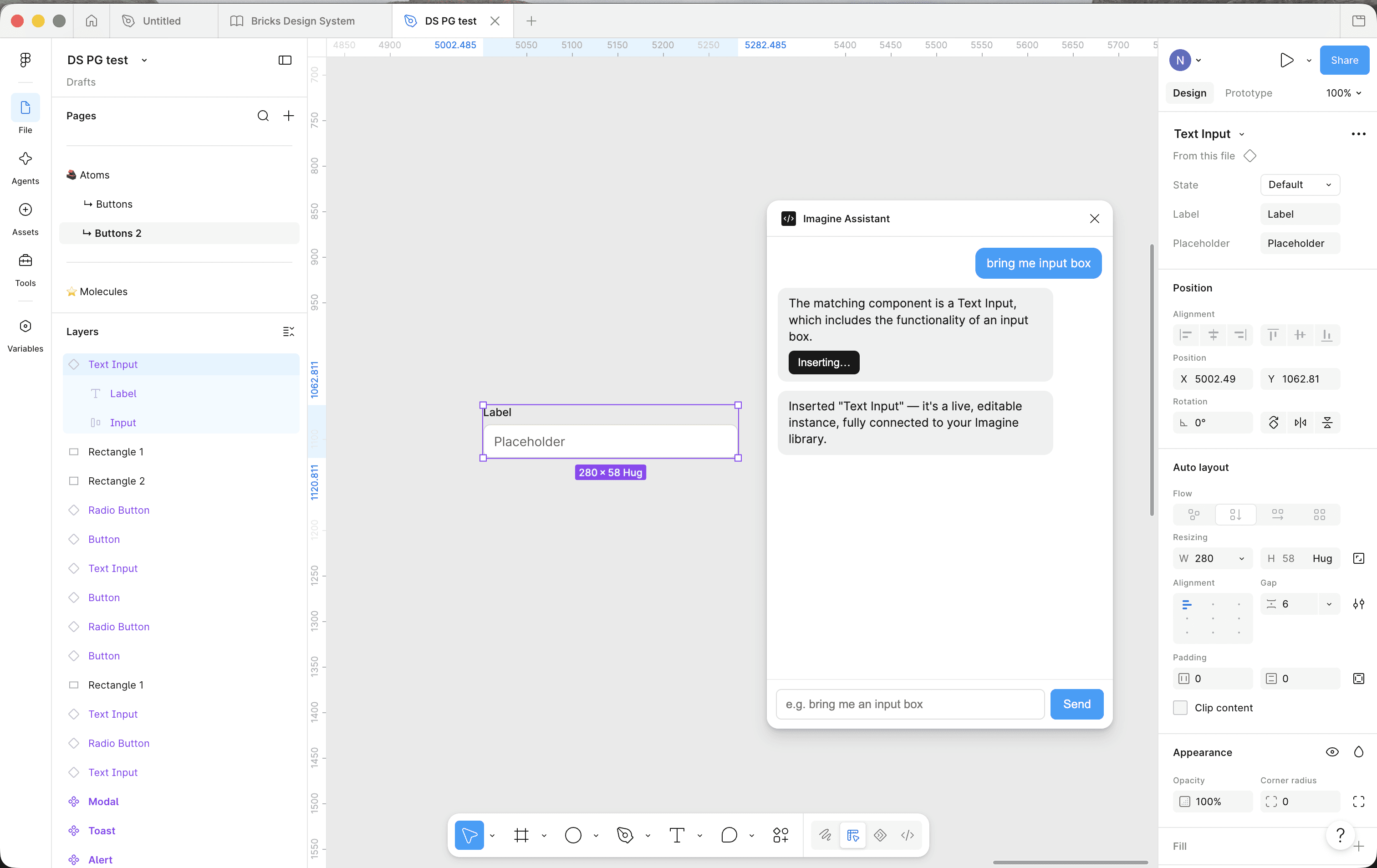
Figma component chatbot returning a query result from the Bricks design system
The research synthesis pipeline pointed in a similar direction. Large qualitative datasets, interview transcripts, survey responses, usability notes, compressed into structured frameworks through an automated synthesis layer. Not replacing the researcher's judgement. Removing the hours of mechanical organisation that precede it so the judgement can start sooner and go deeper.
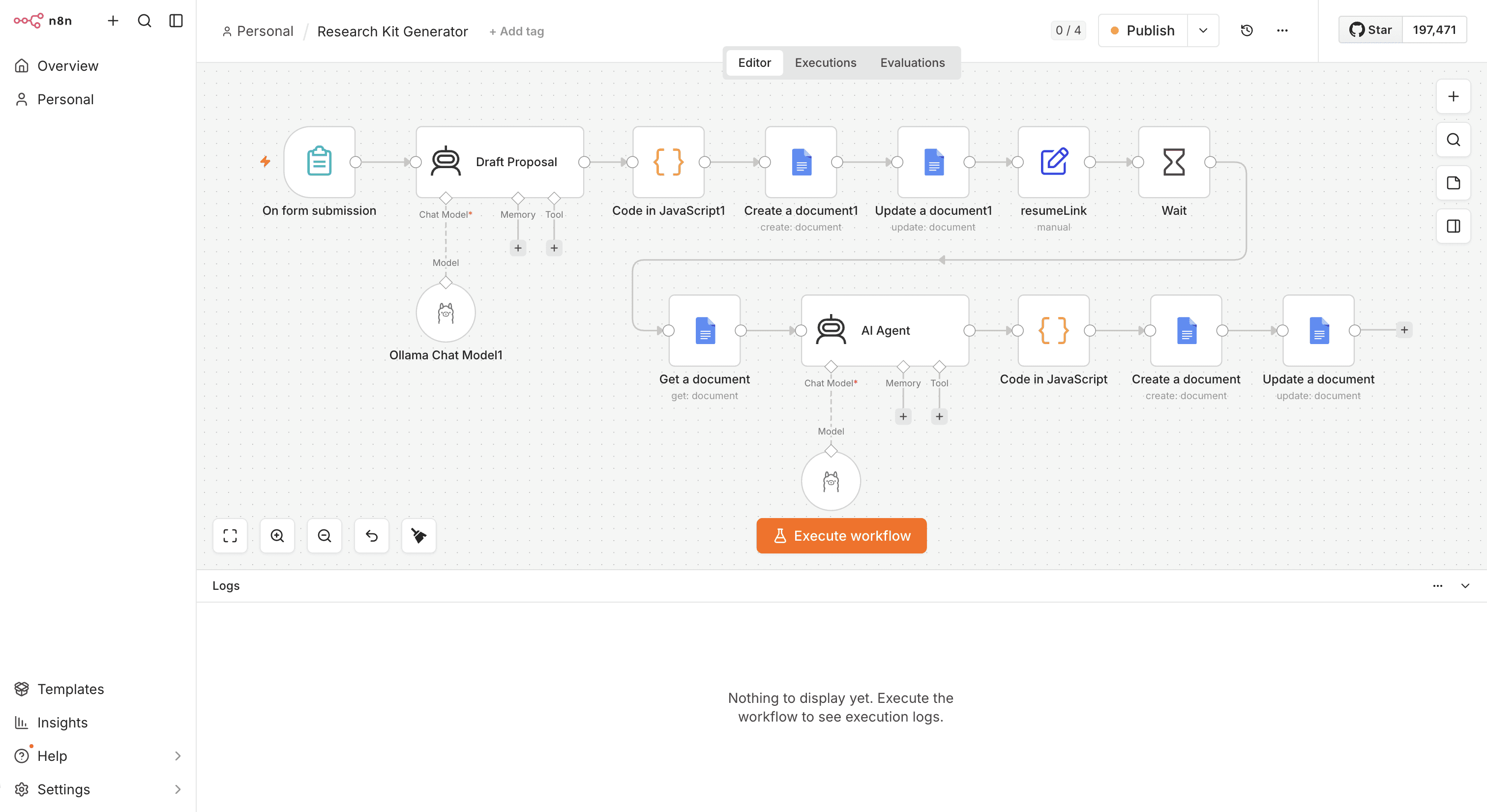
Research synthesis, raw interview data on the left, structured output after automated processing on the right
The same tools are changing how design decisions get communicated, not just how they get made. I wrote about one example, a working simulation of the Houzy chatbot that stakeholders could experience rather than interpret, in AI is the open door.
Each of these is early. None of them is finished. But each one showed enough promise to make the frustration of the setup feel like the right price for the right thing.
The mindset shift
This is not an article about becoming a developer.
It is an article about expanding what a design leader considers their territory.
The technical barrier to building workflows has never been lower. Claude and GPT are not just writing assistants. For a non-technical person, they are the engineering partner you previously had to hire or beg for time with. The troubleshooting, the setup, the incremental debugging, all of it is navigable with the right prompts and the patience to iterate.
What it requires is a willingness to sit in discomfort long enough to get to the other side of it. To treat Docker errors and API limits and model weight decisions as design problems rather than developer problems. To stay curious past the point where it would be easier to stop.
The designers who will matter most in the next five years will not necessarily be the ones who mastered the most tools. They will be the ones who stopped thinking in tools altogether and started thinking in systems, connections, and workflows that did not exist until they built them.
Automate the mundane.
Design the rest.

Nishant Kaku
Director of Design & Research at Housing.com, with 20 years of experience building design practice in high-velocity product organisations.
Next Article