Case Study / Fintech · 2022–2025
Leadership & Scale
Scaling Cashfree from enterprise-led growth to self-serve merchants
TL;DR
Led an 8-person design team through Cashfree’s shift from enterprise sales to self-serve SMB merchants, lifting signup-to-KYC conversion 17% and cutting support tickets 46%.
Cashfree had grown around larger merchants, where relationship managers, sales teams and integration support helped customers navigate the product. As the next phase of growth shifted towards SMBs, that model could no longer scale in the same way.
As Associate Director – UX, I led a design team of 8 through this shift, working with Product, Engineering and business teams to move key merchant journeys from assisted to increasingly self-serve.
+17%
Signup → KYC conversion
+3.5%
Activation → transaction
−46%
Support tickets
87%
Self-integration completion
01 / Onboarding
+17%
Signup → KYC conversion
Making onboarding work without the enterprise support model
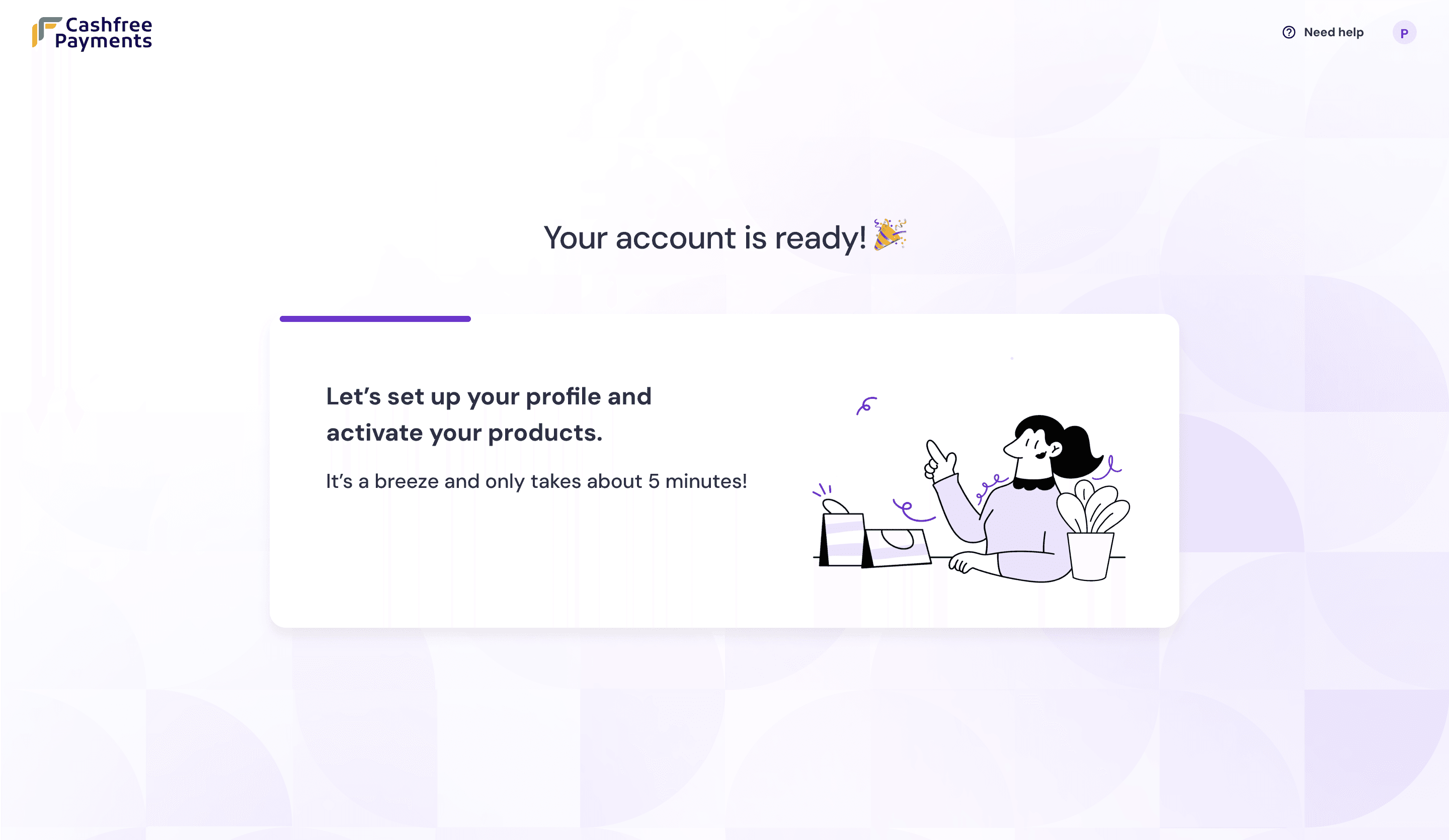
Onboarding had been built for enterprise merchants, with relationship managers on hand to explain KYC. SMB merchants had no one to call, so I set one goal for the redesign: a merchant should finish KYC alone, and fast.
Interviews showed many SMB owners used a savings account or had no business account, and many did not know their IFSC. I pushed to drop bank account verification altogether. Compliance still required a penny-drop check, so we kept it but stopped it blocking progress, adding IFSC search, cheque upload with OCR, and manual entry when OCR failed.
Cutting the 8-step flow brought completion time from 21 to 13 minutes and lifted signup to KYC conversion 17%.
Self-serve onboarding · Web


Self-serve onboarding · App


02 / Self-Integration
+3.5%
Activation → first transaction
Onboarded didn’t mean transaction-ready
Completing KYC did not get a merchant paid. They still had to choose an integration path and get it working, a step built for developers or assisted support.
I started this work myself. I defined the problem, ran the research and wireframed the first solutions. Product validated use cases against business and legal needs and prioritised asks with the business. Engineering checked feasibility and took us through the APIs and backend. Once the direction, problem statement and early wireframes were set, I handed it to the team to design the full flow.
The journey reached 87% completion and raised activation to first transaction 3.5%.
Self-integration


Helping merchants move from activation to their first transaction with less dependency on assisted support
03 / Merchant App
From transaction log to business companion
Once merchants could get themselves transaction-ready, the next question was what Cashfree should become after the first payment.
The existing app was largely operational, helping merchants inspect transactions and payment activity. For self-serve SMBs running their businesses on the go, there was an opportunity to make it considerably more useful.
The team designed it, and I oversaw the work as their manager. I set the vision of an insight-led app, cleared bottlenecks and kept stakeholders aligned. The app turned payment activity into signals about business health, timely actions and ways to grow with Cashfree.
Support tickets fell 46% because SMB merchants could now help themselves. Relationship managers and support had been geared to enterprise clients, so smaller merchants who could not get answers raised tickets instead.
−46%
Support tickets
+32%
Active users
−18%
Uninstalls
Before
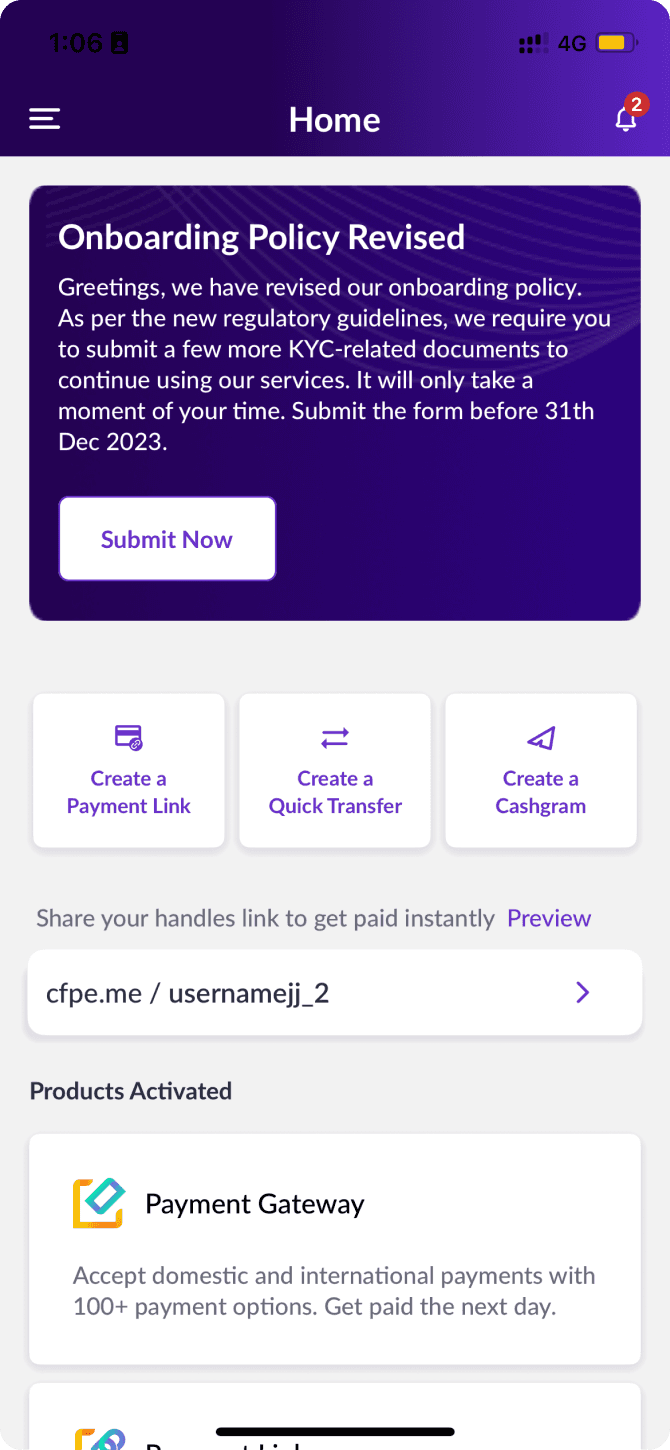
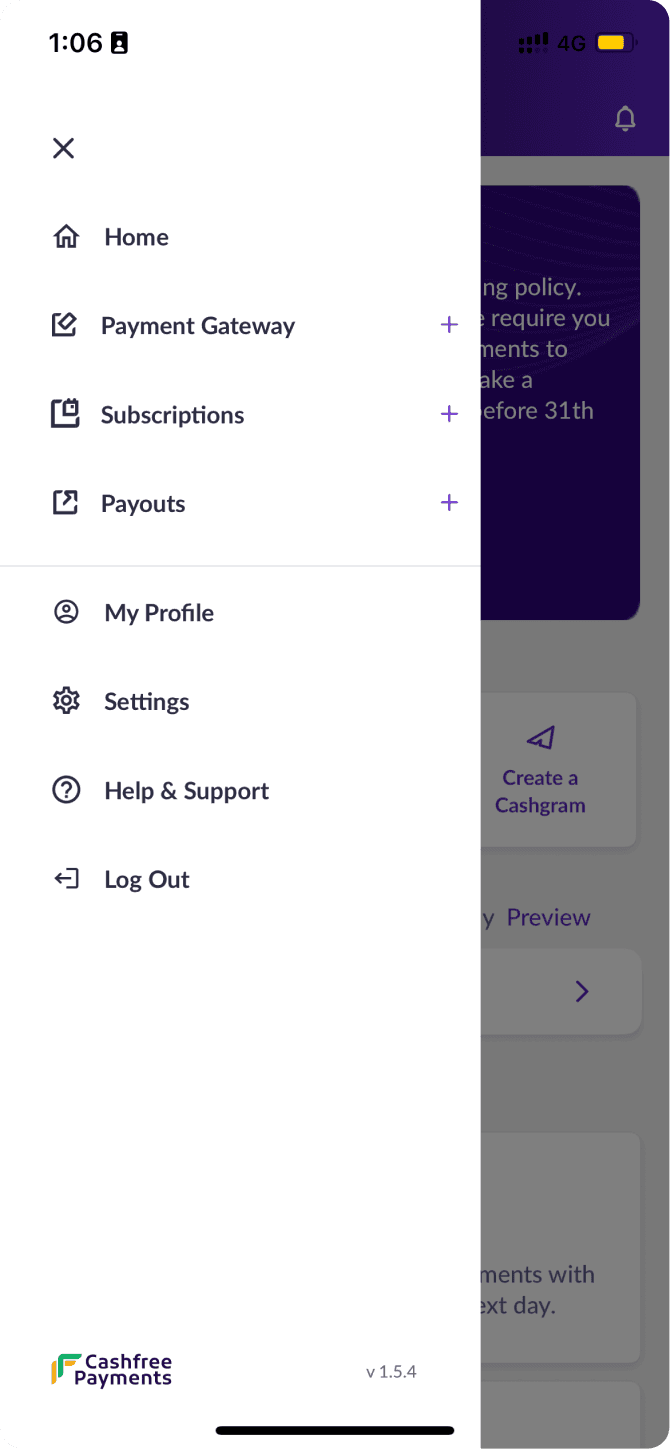

Transaction-led, operational experience


Business health · Insights · Timely actions · Contextual opportunities
04 / Strategy
Defining the SMB merchant
Product, Engineering, Sales, Banking Ops, Legal, Finance and Design each saw a different merchant. Interviews, cross-functional workshops and lifecycle mapping turned that into four SMB archetypes, the shared reference for the work above.
Cross-functional workshops
Merchant lifecycle mapping
4 SMB archetypes
Cross-functional workshops


Connecting merchant problems across the lifecycle
Merchant lifecycle

Mapping needs and opportunities from awareness through revival
Four SMB archetypes


Four SMB archetypes, re-illustrated from workshop outputs
05 / Design Leadership
The product changed. The design practice had to change with it.
Moving towards self-serve changed more than the journeys we designed. It changed what Design needed to contribute.
Research had to enter earlier, designers needed to work across journeys rather than individual requirements, and Product, Engineering and business partners needed to frame problems together.
The practice increasingly moved from receiving requirements towards helping shape what should be solved, why it mattered and how success would be measured.
Outcome Summary
From assisted journeys to a self-serve merchant experience
The shift towards SMBs required more than simplifying individual journeys. It meant aligning the organisation around who the merchant was, reducing dependency across onboarding and integration, and making Cashfree more valuable beyond the transaction itself.
Across these efforts, the product increasingly took on work that previously depended on people, creating a more scalable foundation for self-serve merchant growth.
17% ↑
Signup → KYC conversion
3.5% ↑
Activation → transaction
46% ↓
Support tickets
Next Transformation